
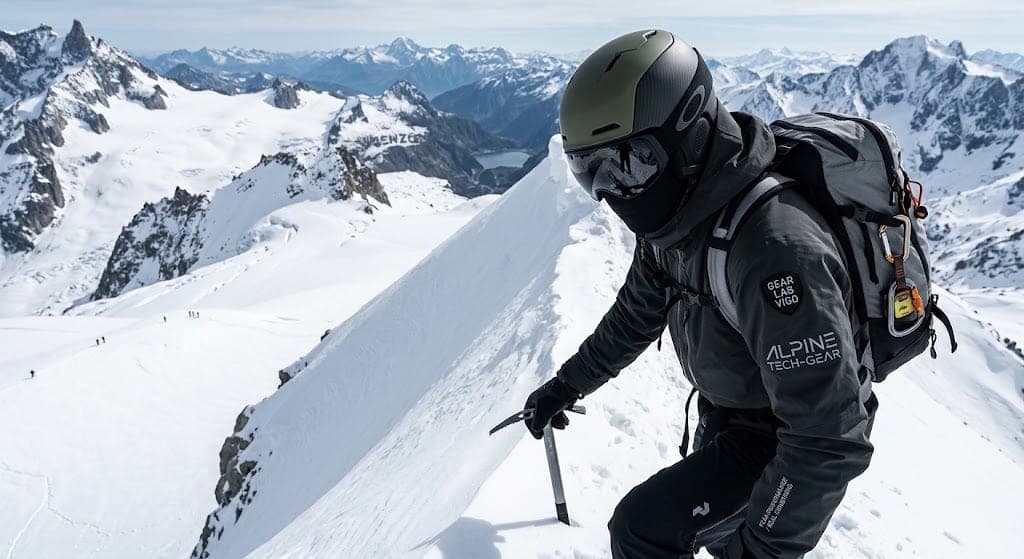
Badly chosen goggles don't just cost you comfort: they can leave you without vision exactly when you need it most, in a sudden change of light or with snow blowing into your face. The mountain reflects far more light than your eyes are used to handling, and conditions change faster than you'd think. This guide brings together the criteria that actually matter: goggles or sunglasses, lens category, colour, frame type, and which technologies are worth it for the way you ski or ride.
In short: for regular use on piste, proper snow goggles — not sunglasses — with a category 2 or 3 lens, a good anti-fog system and a correct fit with your helmet is the safest combination. If you ski in very changeable light, photochromic lenses or an interchangeable lens system is the upgrade you'll notice most.
Why good ski goggles matter
Snow and ice reflect a very high proportion of solar radiation, well above what you meet day to day, which raises the risk of glare and of eye damage from UV exposure. Add cold wind and moving snow particles, and you already have reason enough to wear eye protection designed for snow rather than something generic.
Ski goggles or sunglasses: which should you choose?
It's a common question, and the answer depends on how much and how hard you ski:
| Aspect | Ski/snowboard goggles | Sunglasses |
|---|---|---|
| Protection from wind | Full coverage around the eye | Partial; wind gets in at the sides at speed |
| Field of view | Wide, especially with spherical lenses | More limited, particularly at the sides |
| Fit with a helmet | Designed to sit against the shell | Not always compatible; you can get a gap or pressure |
| Anti-fog | Standard: double lens, venting, anti-fog coating | Rare; they fog easily |
| UV protection | High, with lenses built for light reflected off snow | Present, but not always calibrated for snow |
| Long sessions | Padded foam designed for hours at a time | Can get uncomfortable after a while |
| Adapting to the light | Interchangeable or photochromic lenses available | Photochromic options are rare |
For serious use on piste, goggles are the safer and more comfortable option. Sunglasses can do for a quiet spell in the sun or for après-ski, but they aren't built for continuous use in motion.
Which lens category do I need?
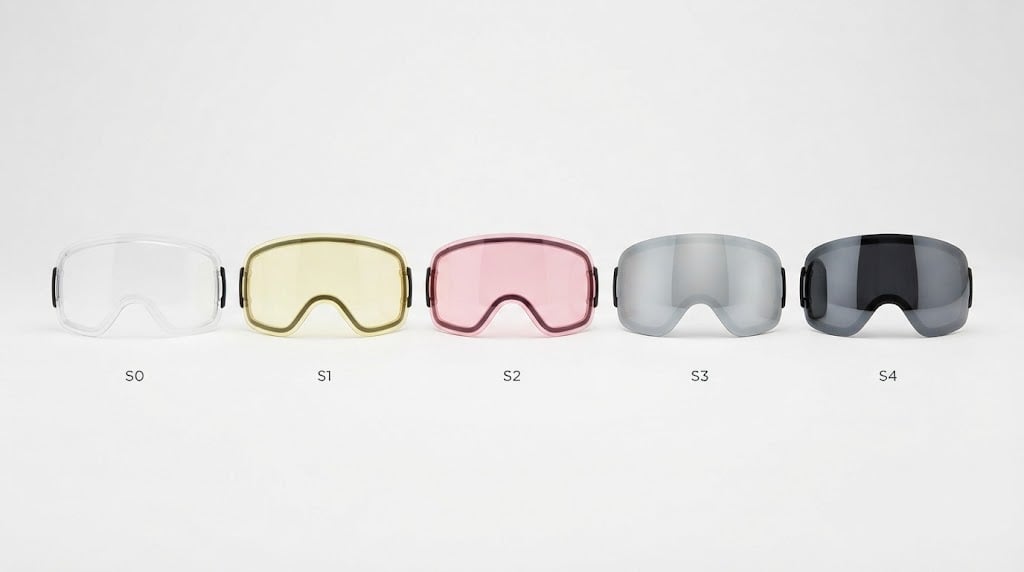
The European standard EN ISO 12312-1 classifies sun filters into five categories according to how much light they let through. From least to most protective:
- Category 0 (0-19% of light absorbed): night use only.
- Category 1 (20-56%): overcast or low-light days.
- Category 2 (57-81%): the most versatile, for changeable light.
- Category 3 (82-92%): sunny days, good protection against strong light.
- Category 4 (92-97%): glaciers and high mountains; the standard itself advises against using these for driving because of how dark they are.
- Photochromic lenses: they adjust how dark they are on their own according to the ambient light, useful when a day swings a lot between sun and cloud.
Which lens colour for which light?
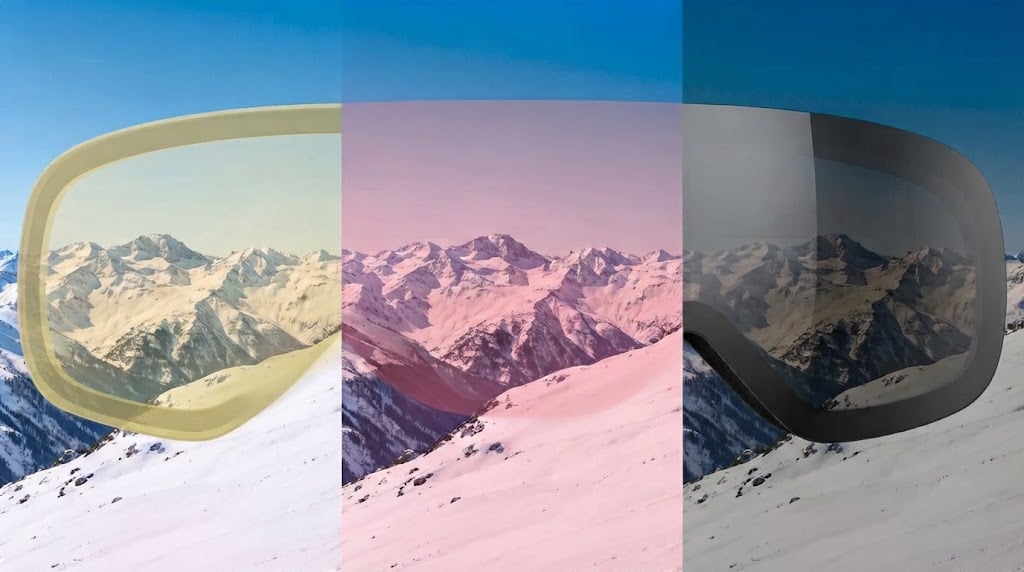
Lens colour isn't just cosmetic: it changes how you read the contrast of the terrain.
- Yellow or gold: improve contrast on overcast or foggy days; too light for strong sun.
- Orange or red: good contrast in changeable or partly cloudy light.
- Smoke or grey: made for very sunny days, they cut glare; too dark when it's overcast.
- Clear: maximum light transmission, for very low light or night skiing.
- Pink: high contrast in low light, not much use in strong sun.
- Blue or green: a balance of contrast and protection on changeable days.
- Black: maximum protection against glare in very strong light; unsuitable in low light.
- Mirror finish: a reflective coating that cuts glare, whatever the base colour of the lens.
Polarised lenses: an advantage with one important caveat
Polarised lenses greatly reduce the glare reflected off snow, which is welcome on a bright day. The caveat worth knowing: by removing that reflection, they can also make icy patches or bumps in the terrain harder to spot, precisely because that shine acts as a visual warning. In high-end lenses designed specifically for snow, with high-contrast tints, this effect is compensated for reasonably well; in generic polarised lenses not made for skiing, it's worth bearing in mind if you often meet icy pistes.
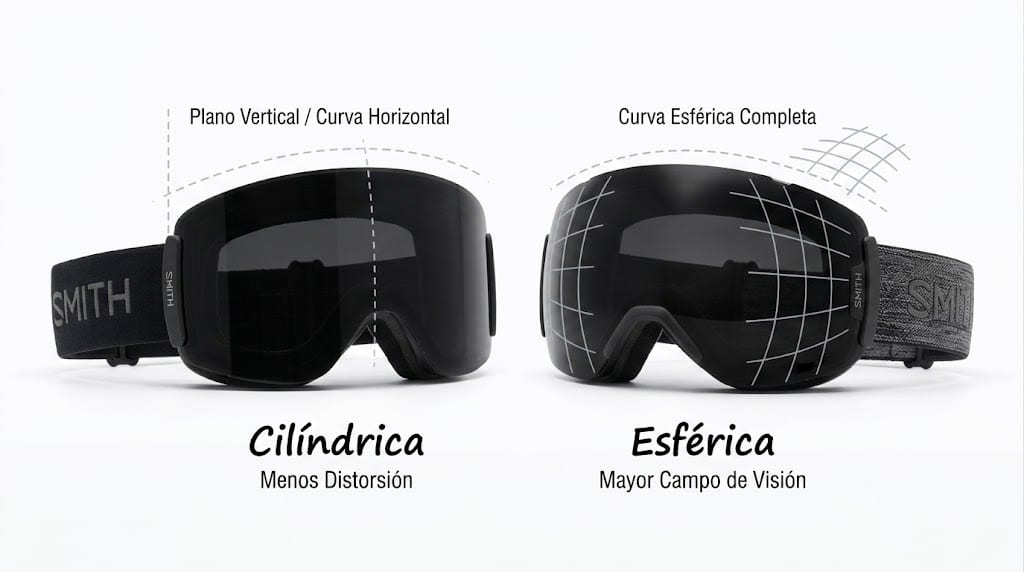
Lens shapes
- Cylindrical: cheaper, they follow the curve of your face well and produce less distortion, at the cost of a slightly narrower field of view.
- Spherical: a wider field of view and a curvature closer to that of the human eye, with a little more distortion at the edges and a higher price.
Technologies worth knowing about
- OTG (Over The Glasses): goggles designed to be worn over prescription glasses.
- Interchangeable lenses: let you switch category or colour to match the light without buying a second pair of goggles; the usual attachment systems are clips, levers or magnets.
- Anti-fog: a coating or design that reduces fogging, particularly relevant on humid days or when you're working hard.
- Double lens: creates an air gap between two lenses that improves insulation and reduces fogging compared with a single lens.
- Hydrophobic coating: repels water and helps the lens stay clear in snow or drizzle.
- Recco Rescue System: some high-end models include a passive reflector that a rescue team can locate with their own detector. As with helmets that carry it, it does not replace a transceiver, shovel and probe if you go off-piste — something we work on from day one in our freeride lessons.
Which standards should your ski goggles meet?
Unlike a helmet, there's no impact-resistance standard here — what matters is the quality of the sun filter. This is what to check before buying:
- CE marking + EN ISO 12312-1: the European standard that regulates sun filters and defines categories 0 to 4. Without this marking there's no guarantee the lens filters what it claims to.
- UV400 protection: means the lens blocks ultraviolet radiation up to 400 nanometres, which is effectively all UVA and UVB.
- Category visible on the lens or packaging: the category number should be marked; if you can't find it anywhere, be suspicious.
One important detail many people don't know: a dark tint and UV protection are two different things. A very dark lens with no UV filter is worse than wearing nothing, because the darkness makes your pupil dilate and lets more radiation into the eye. That's why the marking matters more than how the lens looks. Standards checked in August 2026 — always confirm the current one on the manufacturer's label.
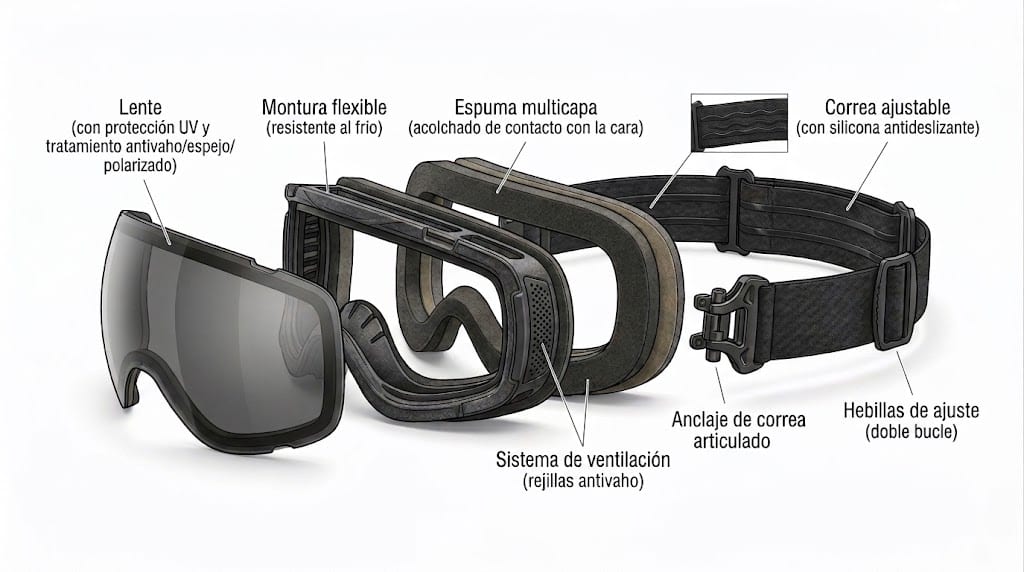
The parts of ski and snowboard goggles
- Lens: the optical part, with the UV protection and whatever treatment it carries (anti-fog, mirror, polarised).
- Frame: holds the lens and needs to stay flexible even in hard cold.
- Foam padding: the layer that touches your face; more layers or density means more comfort and a better seal against the air.
- Venting: grilles or channels that help moisture escape and reduce fogging.
- Adjustable strap: holds the goggles firmly to your head or helmet without excessive pressure.
Size and fit with your helmet
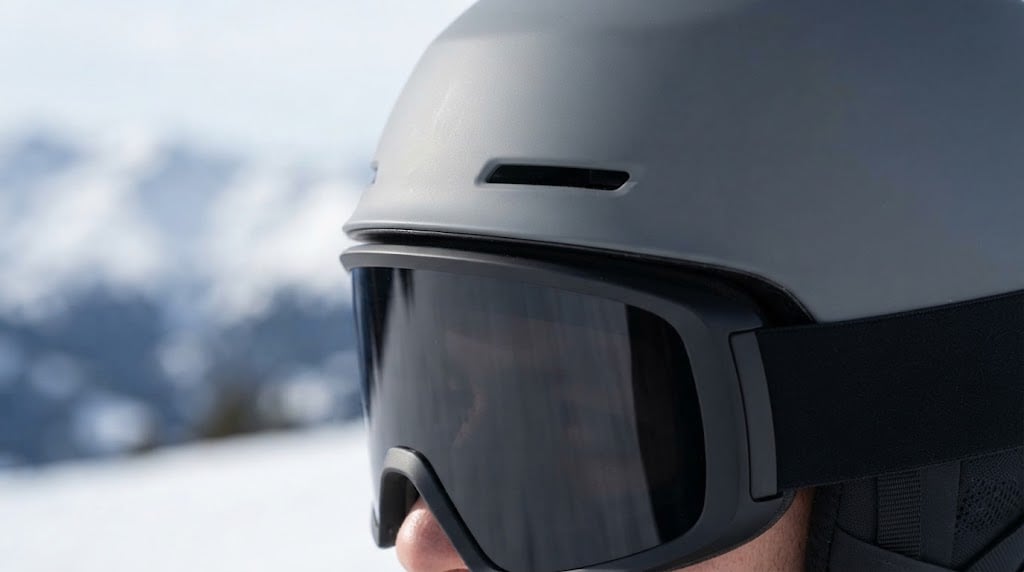
Goggle size depends on the size of your face, not on the brand of helmet you wear, but the two should be tried together before you buy. We cover in detail how to check that helmet and goggles fit with no gaps or pressure points in our guide to choosing a ski or snowboard helmet — the same criteria apply whichever order you buy them in.
Goggles for children
Eye protection for children isn't a minor matter: their lens doesn't filter ultraviolet radiation the way an adult's does — according to ophthalmological sources, the eye's natural filter isn't fully developed until around age 12 — so more UV reaches the retina. On snow, with light bouncing up off the ground, that matters even more.
- Lens category beats design: put a category 3 for sunny days ahead of whichever colour or pattern they like.
- Check the foam seals properly: on small faces it's common for a gap to open at the bridge of the nose, letting in air, cold and light.
- Goggles and helmet, always tried together: as with adults, but with less margin for error, because a child's fit is harder to correct on the hill.
- Strap over the helmet, never under it: if the strap runs underneath, the goggles shift as soon as the child moves or falls.
If your child is taking their first lessons with us, take a look at our kids' ski and snowboard lessons.
Care and maintenance
- Clean with something soft: use a proper lens cloth; any rough fabric can damage the anti-fog coating.
- Never wipe them with your glove on: it's one of the most common ways to scratch a lens without realising.
- Keep them in their case: it protects the lens from scratches and knocks when you're not wearing them.
- Keep them away from direct heat: leaving them in the sun in the car or near a heat source can warp the frame or damage the coating.
Before you buy: a quick checklist
- CE marking with EN ISO 12312-1 and visible UV400 protection.
- Proper snow goggles for use on piste, not generic sunglasses.
- A lens category matched to the usual light where you ski (2-3 for most days).
- An anti-fog system or double lens if you work hard or ski in damp conditions.
- Fit tried together with your helmet, not separately.
- Interchangeable or photochromic lenses if the light changes a lot where you ride.
- If you choose a polarised lens, keep the caveat about spotting icy patches in mind.
Good ski goggles aren't an accessory: they're the difference between reading the piste properly and skiing unsure of what's in front of you. With these criteria clear — type, lens category, colour and fit with your helmet — you can choose with confidence before your next run.